Habits shape almost everything in your life—your productivity, health, finances, and even your mindset. The reason some people seem disciplined while others struggle is not willpower alone. It’s how their habits are built and reinforced over time.
The science of habit formation shows that lasting routines are not created through motivation—they are built through structure, repetition, and environment.
Let’s break down how habits actually form and how you can build routines that stick.
1. Habits Are Built on a Simple Loop
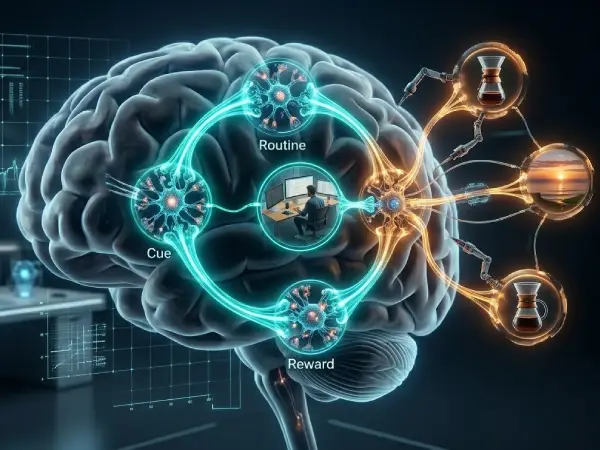
Every habit follows a neurological pattern: cue → routine → reward. Your brain looks for triggers (cue), performs an action (routine), and expects a benefit (reward).
Once this loop is repeated enough times, the behavior becomes automatic.
Key insight: Habits are neurological shortcuts.
What to do: Identify what triggers your current habits.
2. Start Small to Build Momentum
One of the biggest mistakes is trying to change too much too quickly. The brain resists large changes but accepts small ones easily.
Small actions are more sustainable and easier to repeat.
Key insight: Consistency matters more than intensity.
What to do: Begin with habits so small they feel effortless.
3. Environment Shapes Behavior More Than Motivation
Your surroundings influence your actions more than your intentions. A well-designed environment makes good habits easier and bad habits harder.
Behavior follows convenience.
Key insight: Environment often beats willpower.
What to do: Remove friction for good habits and add friction for bad ones.
4. Repetition Rewires the Brain
Each time you repeat a behavior, your brain strengthens neural pathways. Over time, this reduces effort and increases automaticity.
This is how habits become natural.
Key insight: Repetition creates efficiency in the brain.
What to do: Focus on repeating habits daily, not perfectly.
5. Rewards Reinforce Behavior
The brain repeats actions that feel rewarding. Even small rewards help strengthen habit loops.
Without reward, habits fade.
Key insight: The brain follows pleasure and avoids pain.
What to do: Attach a small positive feeling or reward to your habit.
6. Identity Shapes Long-Term Habits
The strongest habits are identity-based, not goal-based. Instead of saying “I want to run,” you say “I am someone who runs.”
Identity drives consistency more than motivation.
Key insight: Who you believe you are shapes what you do.
What to do: Focus on becoming the type of person who has the habit.
7. Break Bad Habits by Interrupting the Loop
Bad habits also follow the same cue-routine-reward structure. To break them, you must interrupt the pattern at one stage.
Changing environment or response helps weaken the loop.
Key insight: Disruption breaks automation.
What to do: Identify triggers and replace the behavior with a better alternative.
Final Thoughts
Habits are not built through motivation spikes—they are built through systems that make good behavior automatic and bad behavior difficult.
When you understand how cues, repetition, environment, and identity work together, you gain control over your routines.
Because in the end,
your habits don’t just reflect your life—they create it.