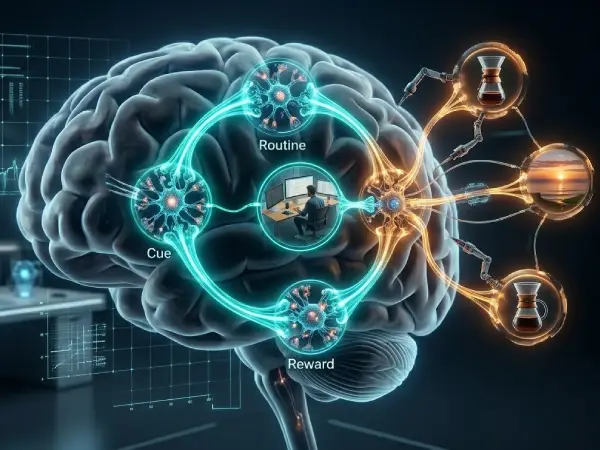
Big life changes rarely come from big actions done once. They come from small actions repeated consistently over time. This is the core idea behind habit science and behavioral psychology: your daily micro-decisions compound into long-term outcomes.
The brain loves efficiency. When you repeat small behaviors, they become automatic—and that’s where real transformation happens.
Let’s look at 10 tiny habits that may feel insignificant today but create powerful results over time.
1. 2-Minute Start Rule
Starting is the hardest part of any task. Research in behavioral science shows that reducing friction increases follow-through. A 2-minute start removes resistance and activates momentum.
Key insight: Action reduces procrastination.
Tiny habit: Start any task for just 2 minutes.
2. Drink a Glass of Water After Waking Up
Hydration affects energy, focus, and cognitive performance. Even mild dehydration can reduce mental clarity.
Key insight: Small physical habits impact brain performance.
Tiny habit: Drink water immediately after waking up.
3. Write One Sentence Daily
Writing strengthens clarity of thought and improves communication skills over time. Even one sentence builds consistency.
Key insight: Thinking improves through expression.
Tiny habit: Write one meaningful sentence each day.
4. 5-Minute Learning Rule
Continuous learning compounds into major skill advantages. Short daily learning sessions are more sustainable than long occasional ones.
Key insight: Consistency beats intensity.
Tiny habit: Learn something new for 5 minutes daily.
5. Clean One Small Area
Your environment influences your behavior more than motivation does. Small acts of organization reduce mental clutter.
Key insight: External order improves internal clarity.
Tiny habit: Clean one small space each day.
6. Read One Page
Reading just one page lowers resistance and often leads to more reading naturally. It builds identity as a reader over time.
Key insight: Identity builds through repetition.
Tiny habit: Read at least one page daily.
7. Pause Before Checking Your Phone
Most digital habits are automatic. Introducing a pause increases awareness and reduces unconscious scrolling.
Key insight: Awareness breaks automation.
Tiny habit: Wait 10 seconds before unlocking your phone.
8. Write Down One Win of the Day
Positive reflection strengthens motivation and reinforces progress perception. This improves emotional resilience over time.
Key insight: Awareness of progress builds momentum.
Tiny habit: Note one small daily achievement.
9. 1-Minute Planning for Tomorrow
Planning reduces decision fatigue and increases productivity. Even a short plan improves direction.
Key insight: Clarity reduces mental load.
Tiny habit: Write tomorrow’s top 1–3 tasks before sleeping.
10. 5 Deep Breaths Before Stressful Moments
Controlled breathing activates the parasympathetic nervous system, reducing stress response and improving emotional control.
Key insight: Breath controls emotional regulation.
Tiny habit: Take 5 slow breaths before reacting.
Final Thoughts
Tiny habits don’t feel powerful in the moment—but over weeks, months, and years, they compound into major life changes. The key is not intensity, but consistency without friction.
When you stack small behaviors, your identity, mindset, and results gradually transform.
Because in the end,
big results are just small habits repeated long enough.