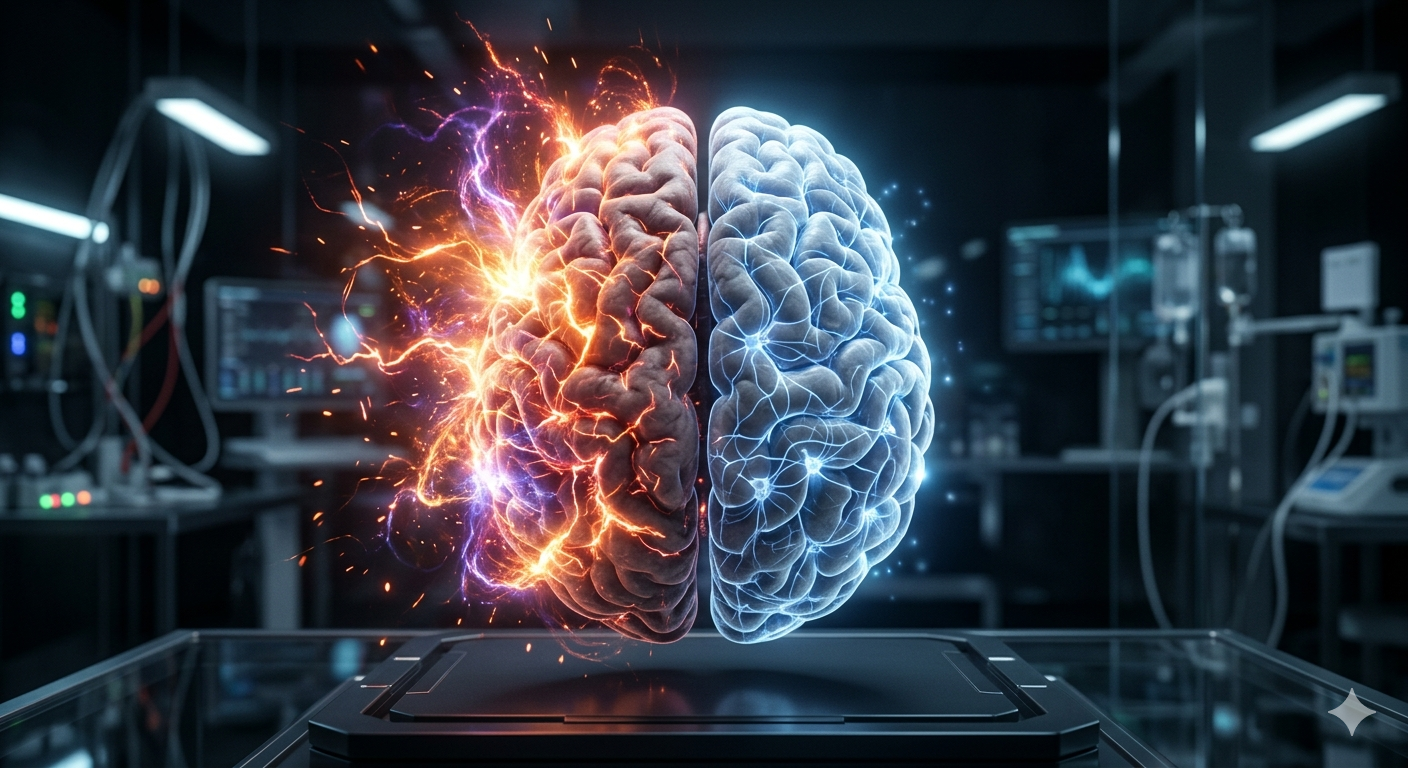
Have you ever said something in anger and regretted it seconds later? Or made a decision under stress that didn’t reflect your true thinking? That’s not a lack of intelligence—it’s something psychologists call emotional hijacking.
Emotional hijacking occurs when your brain’s emotional system takes control before your logical mind has time to respond. Understanding why this happens—and how to manage it—can dramatically improve your decisions, relationships, and self-control.
Let’s break it down.
1. What Is Emotional Hijacking?
Emotional hijacking happens when the brain’s threat-detection system reacts instantly to a situation it perceives as dangerous—whether the threat is real or not.
This reaction is fast, automatic, and often overwhelming.
Key insight: Your brain prioritizes survival over logic.
2. The Amygdala Reacts Before Logic Kicks In
The amygdala, a part of the brain responsible for processing emotions like fear and anger, acts as an early warning system. When it detects a threat, it triggers a rapid emotional response.
The logical part of your brain (prefrontal cortex) takes longer to activate, which is why reactions often come before rational thinking.
Key insight: Emotion is faster than logic.
3. Why Emotional Hijacking Feels So Strong
During an emotional hijack, your body releases stress hormones like adrenaline. This increases heart rate, sharpens focus on the “threat,” and prepares you for action.
While useful in real danger, this response can be harmful in everyday situations like arguments or work stress.
Key insight: Your body reacts as if the situation is urgent—even when it’s not.
4. Triggers Are Often Personal and Repeated
Emotional hijacks are usually triggered by patterns—criticism, rejection, pressure, or past experiences. These triggers create automatic reactions based on memory.
Understanding your triggers is the first step to controlling them.
Key insight: Reactions are often learned, not random.
What to do: Identify situations that consistently trigger strong emotions.
5. The Pause Is Your Most Powerful Tool
The key to regaining control is creating a gap between emotion and action. Even a few seconds can allow your logical brain to catch up.
This pause interrupts automatic reactions.
Key insight: Control begins in the pause.
What to do: Take a deep breath and delay your response by a few seconds.
6. Labeling Emotions Reduces Their Intensity
Research shows that naming your emotion (e.g., “I feel angry” or “I feel stressed”) activates the logical brain and reduces emotional intensity.
This process is called affect labeling.
Key insight: Naming emotion helps regulate it.
What to do: Clearly identify what you’re feeling in the moment.
7. Reframing Changes Your Response
Once you pause and identify the emotion, the next step is reframing the situation. Instead of reacting impulsively, you reinterpret what’s happening.
This shifts your response from reactive to intentional.
Key insight: Interpretation shapes reaction.
What to do: Ask, “Is there another way to view this situation?”
Final Thoughts
Emotional hijacking is a natural human response—not a weakness. But without awareness, it can damage decisions, relationships, and performance.
The goal is not to eliminate emotions—it’s to prevent them from taking control.
When you learn to pause, label, and reframe, you shift from reacting automatically to responding intelligently.
Because in the end,
true control is not stopping emotions—it’s choosing how you respond to them.