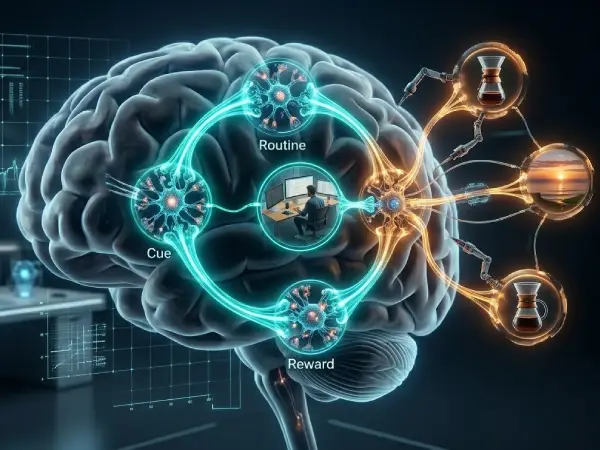
Most people believe success depends on willpower—forcing yourself to work harder, resist distractions, and stay disciplined. But research in psychology and behavioral science shows a different truth: willpower is limited, inconsistent, and unreliable.
You don’t fail because you lack willpower. You fail because you rely on it too much.
Real change doesn’t come from motivation spikes. It comes from systems, habits, and environment design that make good behavior automatic.
Let’s break down why willpower fails—and what actually works instead.
1. Willpower Is a Finite Resource
Studies in psychology suggest that self-control behaves like a limited mental energy. The more decisions and resistance you use in a day, the weaker it becomes.
That’s why discipline often breaks down at night or during stress.
Key insight: Willpower drains with use.
What to do: Reduce the number of decisions you need to make daily.
2. Motivation Is Emotion-Based, Not Stable
Motivation depends on mood, energy, and external triggers. That means it rises and falls constantly. If you depend on motivation, your habits will be inconsistent.
Successful people don’t rely on feeling motivated—they rely on structure.
Key insight: Motivation is temporary energy.
What to do: Build routines that work even when motivation is low.
3. Environment Beats Willpower Every Time
Your surroundings influence behavior more than intention. If your environment makes bad habits easy and good habits hard, willpower will always lose.
Behavior follows convenience, not goals.
Key insight: Design your environment to support your goals.
What to do: Make good habits obvious and bad habits inconvenient.
4. Habits Remove the Need for Decision-Making
Every decision uses mental energy. Habits eliminate decision fatigue by turning actions into automatic routines.
This is why disciplined people seem effortless—they’ve automated behavior.
Key insight: Automation replaces effort.
What to do: Repeat small actions until they become automatic.
5. Identity Is Stronger Than Willpower
Trying to rely on willpower feels like fighting yourself. But identity-based habits feel natural because they align with how you see yourself.
“I don’t need motivation—I’m this type of person.”
Key insight: Identity drives consistency.
What to do: Focus on becoming the person who naturally does the habit.
6. Reduce Friction for Good Habits
The easier something is to start, the more likely it will happen. Small changes in setup can drastically improve behavior.
Willpower becomes unnecessary when action is simple.
Key insight: Ease beats effort.
What to do: Prepare your environment in advance for desired habits.
7. Increase Friction for Bad Habits
The opposite is also true. If bad habits require effort, they become less automatic and less frequent.
Small obstacles are powerful behavior interrupters.
Key insight: Difficulty reduces repetition.
What to do: Add small barriers to distractions and unhealthy routines.
Final Thoughts
Willpower is not useless—but it is not enough. Relying on it alone is like trying to drive a car with only temporary fuel. Eventually, you stop.
Real success comes from systems that make good behavior automatic and bad behavior difficult.
When habits, environment, and identity align, discipline stops feeling like a battle.
Because in the end,
you don’t rise to the level of your willpower—you fall to the level of your systems.