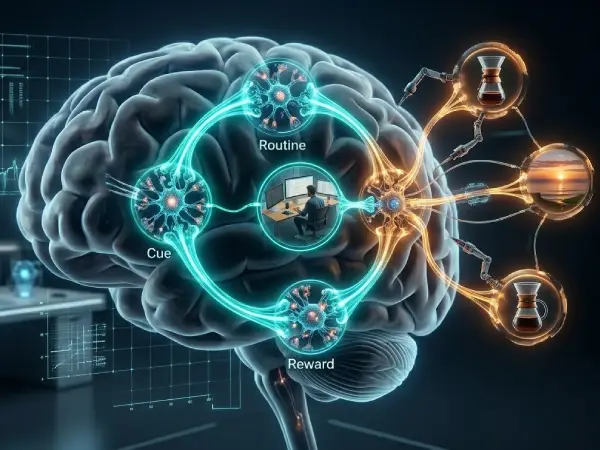
Most people try to become productive by managing their time better—using calendars, schedules, and strict routines. But despite all this planning, they still feel tired, unfocused, and overwhelmed.
The missing piece is not time management—it’s energy management.
Because the truth is simple: you don’t just work with time—you work with energy inside that time. And if your energy is low, even a perfectly planned schedule fails.
Let’s break down why managing energy is more powerful than managing time—and how you can use it to become significantly more productive.
1. Time Is Fixed, But Energy Fluctuates
Everyone has the same 24 hours. But not everyone has the same mental and physical energy during those hours.
Some hours you feel sharp and focused. Other hours you feel slow and distracted. That’s normal.
The mistake is treating all hours equally.
Key insight: Productivity depends more on when you do a task than how much time you have.
2. Your Brain Works in Energy Cycles
Your brain doesn’t operate at a constant level. It moves through natural cycles of high and low energy throughout the day.
During high-energy periods, you can solve problems faster, think clearly, and produce better work. During low-energy periods, even simple tasks feel difficult.
What to do: Identify your peak energy hours and protect them for important work.
3. Willpower Is an Energy Resource, Not a Skill
Many people think willpower is something you “have” or “don’t have.” In reality, it behaves like energy—it gets depleted throughout the day.
Every decision, distraction, and interruption reduces mental energy.
Key insight: By evening, your brain is not weaker—it is just more depleted.
4. Task Timing Matters More Than Task Duration
A 1-hour task done during high energy can be more productive than 3 hours of low-energy work.
This is why some people achieve more in less time—they align tasks with their energy levels.
What to do:
- High energy → deep work, creativity, problem-solving
- Low energy → admin tasks, emails, simple routines
5. Physical Energy Controls Mental Performance
Your brain is part of your body. If your physical energy is low, your mental performance drops automatically.
Sleep, nutrition, hydration, and movement directly influence focus and decision-making.
What to do: Treat your body like a productivity tool, not separate from it.
6. Emotional Energy Also Affects Focus
Stress, anxiety, and emotional overload consume mental energy silently. Even if you have time, emotional exhaustion reduces your ability to think clearly.
This is why some days feel unproductive even when you’re not busy.
What to do: Take short breaks to reset emotionally—walk, breathe, or disconnect briefly.
7. Protect Energy, Don’t Just Schedule Tasks
A packed schedule doesn’t guarantee productivity. In fact, it often destroys energy through constant switching and overload.
High performers don’t just manage time—they protect energy like a resource.
What to do: Leave buffer space in your day instead of overloading your calendar.
Final Thoughts
Time management helps you organize your day. But energy management determines how effectively you use that day.
When you start aligning your tasks with your natural energy levels, productivity stops feeling forced—and starts feeling natural.
The goal is not to do more in less time.
The goal is to do the right things when your mind is at its best.
Because in the end,
time tells you when to work—but energy decides how well you work.