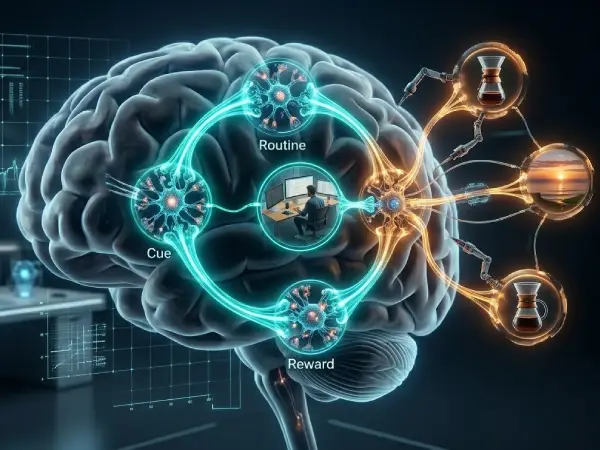
Multitasking feels like a modern superpower. Answering emails while attending meetings, switching between apps, or juggling multiple tasks at once can make you feel productive. But neuroscience tells a very different story.
In reality, what most people call multitasking is actually task switching—and it comes with a hidden cost that quietly reduces your productivity, focus, and mental energy.
Let’s explore what science says about multitasking and how to fix it.
1. Your Brain Doesn’t Truly Multitask
Neuroscience shows that the brain cannot focus on two complex tasks at the same time. Instead, it rapidly switches between tasks.
Each switch requires mental energy, attention reset, and cognitive recalibration. This slows you down more than you realize.
Key insight: You’re not doing things together—you’re constantly restarting your focus.
2. Task Switching Creates “Attention Residue”
When you move from one task to another, part of your attention stays stuck on the previous task. This leftover mental focus is called attention residue.
It reduces your ability to fully engage in the new task, even if you think you’ve switched completely.
What to do: Finish one task or reach a clear stopping point before switching.
3. Multitasking Lowers Work Quality
Studies show that multitasking reduces accuracy and increases mistakes. When your brain divides attention, it cannot process information deeply.
As a result, work becomes shallow instead of high-quality.
Key insight: Speed increases, but quality decreases.
4. It Increases Mental Fatigue
Every time your brain switches tasks, it uses extra energy. Over time, this leads to cognitive fatigue, making you feel tired even without heavy work.
This is why a “busy” day can still feel draining without real progress.
What to do: Limit unnecessary switching between tasks.
5. Focus Is a Limited Resource
Your attention is not unlimited. It behaves like a battery that drains with use and distraction.
Multitasking drains this battery faster than focused work.
Key insight: Deep focus preserves energy, while multitasking destroys it.
6. Single-Tasking Improves Speed and Clarity
When you focus on one task, your brain enters a deeper state of concentration. This improves both speed and quality of output.
You finish tasks faster because you are not constantly restarting your attention.
What to do: Commit to one task for a set period of time without switching.
7. Structured Work Beats Random Switching
Unplanned multitasking leads to chaos, but structured focus sessions improve efficiency. Time-blocking and focused sprints help your brain stay in one mode longer.
This reduces cognitive load and improves consistency.
What to do: Plan your day in focused blocks instead of open-ended multitasking.
Final Thoughts
Multitasking feels productive, but science shows it is often the opposite. It fragments your attention, reduces quality, and increases mental fatigue.
True productivity comes from deep focus, not divided attention.
When you stop switching and start focusing, you don’t just get more done—
you get better results with less effort.