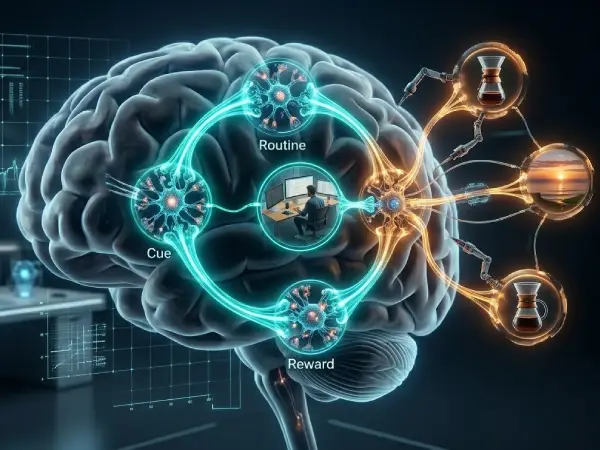
Every day, you make thousands of decisions—what to eat, what to focus on, who to trust, and what direction your life should take. Most of these choices feel instant and effortless, but behind the scenes, your brain is running a complex biological process that shapes every outcome.
Neuroscience shows that decision-making is not purely logical. It is a constant interaction between emotion, memory, reward systems, and cognitive control. Understanding how your brain actually makes choices can help you make wiser, more intentional decisions in life.
Let’s break down what science reveals about decision-making—and how you can use it to your advantage.
1. Your Brain Uses Two Systems to Decide
Neuroscience suggests that decision-making involves two major systems: one fast and emotional, the other slow and logical.
The emotional system reacts quickly based on instinct, while the logical system analyzes information carefully. Most decisions are influenced by both—but emotional signals often come first.
This is why people sometimes make impulsive choices and later regret them.
How to improve decisions: Pause before reacting. Even a few seconds of delay allows your logical brain to take control.
2. Dopamine Drives Your Choices
Dopamine is often called the “reward chemical,” but it doesn’t just make you feel good—it predicts rewards. Your brain releases dopamine when it expects something beneficial.
This is why scrolling social media, checking notifications, or chasing quick wins feels addictive.
How to improve decisions: Reduce instant-reward distractions and focus on long-term goals that build stable dopamine patterns.
3. The Prefrontal Cortex Is Your Control Center
The prefrontal cortex is the part of your brain responsible for planning, reasoning, and self-control. It helps you override impulses and think ahead.
However, it becomes weaker when you’re stressed, tired, or overwhelmed.
How to improve decisions: Sleep well, manage stress, and avoid decision-making when mentally exhausted.
4. Emotions Are Not the Enemy—They Are Signals
Contrary to popular belief, emotions are not irrational. They provide valuable information about your environment and internal state.
Fear may signal risk. Excitement may signal opportunity. The problem is not emotion itself—but reacting without understanding it.
How to improve decisions: Identify your emotion before acting. Ask, “What is this feeling telling me?”
5. Cognitive Biases Shape Every Choice
Your brain uses mental shortcuts (biases) to save energy, but these shortcuts can distort judgment. For example, you may overvalue recent events or follow what others are doing.
These biases are automatic and invisible unless you train yourself to notice them.
How to improve decisions: Slow down thinking and question your first assumption.
6. Stress Shrinks Your Thinking Ability
When stress levels rise, your brain shifts into survival mode. This reduces access to rational thinking and increases impulsive behavior.
In high-stress moments, people tend to make short-term decisions instead of long-term ones.
How to improve decisions: Avoid making important decisions when emotionally overwhelmed.
7. Memory Influences What You Believe Is Right
Your brain relies heavily on memory when making decisions. But memory is not perfect—it is selective and emotional.
This means past experiences can shape current decisions, even when the situation is different.
How to improve decisions: Focus on present facts instead of relying only on past experiences.
Final Thoughts
Decision-making is not just a mental process—it is a biological one. Your brain is constantly balancing emotion, logic, reward, and memory to guide your actions.
The key to better decisions is not removing emotion, but understanding how your brain works and creating space for clarity.
When you slow down, question your instincts, and manage your mental state, you don’t just make better choices—you shape a better life.
Because in the end, your decisions are not just actions—
they are the architecture of your future.