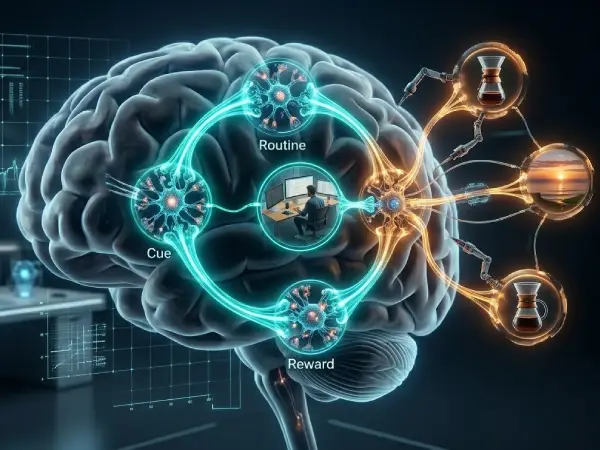
Resilience is often described as “mental toughness,” but science paints a more precise picture. A resilient mind is not one that never struggles—it’s one that adapts, recovers, and grows stronger after stress. It’s the ability to stay stable under pressure and return to balance after setbacks.
In neuroscience and psychology, resilience is not a personality trait you are simply born with. It is a trainable mental system shaped by habits, thinking patterns, emotional regulation, and brain plasticity.
Let’s uncover the science-backed secrets behind building a resilient mind.
1. Your Brain Learns From Stress, Not Avoidance
One of the biggest misconceptions is that resilient people avoid stress. In reality, the brain becomes stronger through controlled exposure to challenges. Each time you face difficulty and recover, your brain builds stronger neural pathways for coping.
Avoidance, on the other hand, reinforces fear.
What to do: Don’t escape small challenges—face them in manageable steps so your brain learns safety through experience.
2. Cognitive Reframing Changes Emotional Impact
Your brain doesn’t react to events directly—it reacts to how you interpret them. This is why two people can experience the same situation but feel completely different emotionally.
Resilient individuals naturally reframe situations in a more balanced way.
What to do: When something goes wrong, ask: “What can I learn from this?” instead of “Why is this happening to me?”
3. Emotional Regulation Is a Trainable Skill
The prefrontal cortex helps regulate emotional reactions from the amygdala (the brain’s threat center). When this system is strong, you don’t get overwhelmed easily.
Like a muscle, emotional control improves with practice.
What to do: Pause before reacting. Even a 5–10 second delay improves emotional regulation.
4. Your Body and Mind Are Connected
Stress is not just mental—it is physical. Sleep, nutrition, and movement directly affect how resilient your mind feels. A tired brain is more reactive and less adaptable.
Resilience depends heavily on biological stability.
What to do: Prioritize sleep, regular movement, and balanced nutrition to stabilize your stress response.
5. Meaning Builds Mental Strength
Research shows that people who find meaning in their struggles recover faster from adversity. Meaning gives your brain a sense of purpose, which reduces emotional chaos during hardship.
Without meaning, challenges feel random and overwhelming.
What to do: Connect difficult experiences to long-term goals or personal growth.
6. Social Support Strengthens Neural Stability
Human connection plays a major role in resilience. Positive relationships reduce stress hormones and increase emotional stability. The brain feels safer when it is supported.
Isolation, on the other hand, increases vulnerability to stress.
What to do: Maintain relationships that provide emotional safety and understanding.
7. Small Wins Build Psychological Armor
Every time you complete a task or overcome a small challenge, your brain registers success. These small wins accumulate and create a stronger sense of capability over time.
Resilience grows through repetition of success experiences.
What to do: Break goals into small steps and celebrate progress consistently.
Final Thoughts
A resilient mind is not built in moments of comfort—it is shaped in moments of challenge. Neuroscience shows that your brain is constantly adapting based on how you respond to stress, not the presence of stress itself.
You don’t need to eliminate difficulty to become stronger. You need to learn how to respond differently to it.
Because resilience is not about avoiding the storm—
it is about learning how to stand steady within it.